 920002157
 support@bontech.sa


Restaurant sustainability is no longer a trend, but a smart business strategy. In today’s competitive food service market, sustainable restaurants reduce waste, control costs, and build stronger customer trust. By adopting the right systems and processes, restaurant sustainability can directly improve profitability while supporting environmental and social responsibility.
What is Restaurant Sustainability?
Restaurant sustainability refers to operating a restaurant in a way that minimizes environmental impact, reduces waste, uses resources efficiently, and supports long-term business growth. It combines eco-friendly practices with operational efficiency to create a balance between profit, people, and the planet.
This includes reducing food waste, optimizing energy and water usage, sourcing responsibly, and leveraging technology to streamline operations. Many restaurant sustainability examples show that sustainability is not just about being “green,” but about running smarter, leaner, and more resilient businesses.
Book a free trial of Bontech Restaurant Management System
Why Restaurant Sustainability Matters in Saudi Arabia?
In Saudi Arabia, restaurant sustainability is especially important due to rising operational costs, increasing food imports, and growing consumer awareness. Vision 2030 emphasizes sustainability, waste reduction, and efficient resource management—goals that align perfectly with modern restaurant operations.
Fast-growing urban centers and a thriving dining culture mean higher food consumption and, unfortunately, higher waste. Fast food restaurant sustainability has become a critical focus, as high-volume operations can generate significant waste if not managed properly. Sustainable practices help restaurants comply with regulations, reduce expenses, and appeal to environmentally conscious customers in the Kingdom.
Restaurant Sustainability Strategies
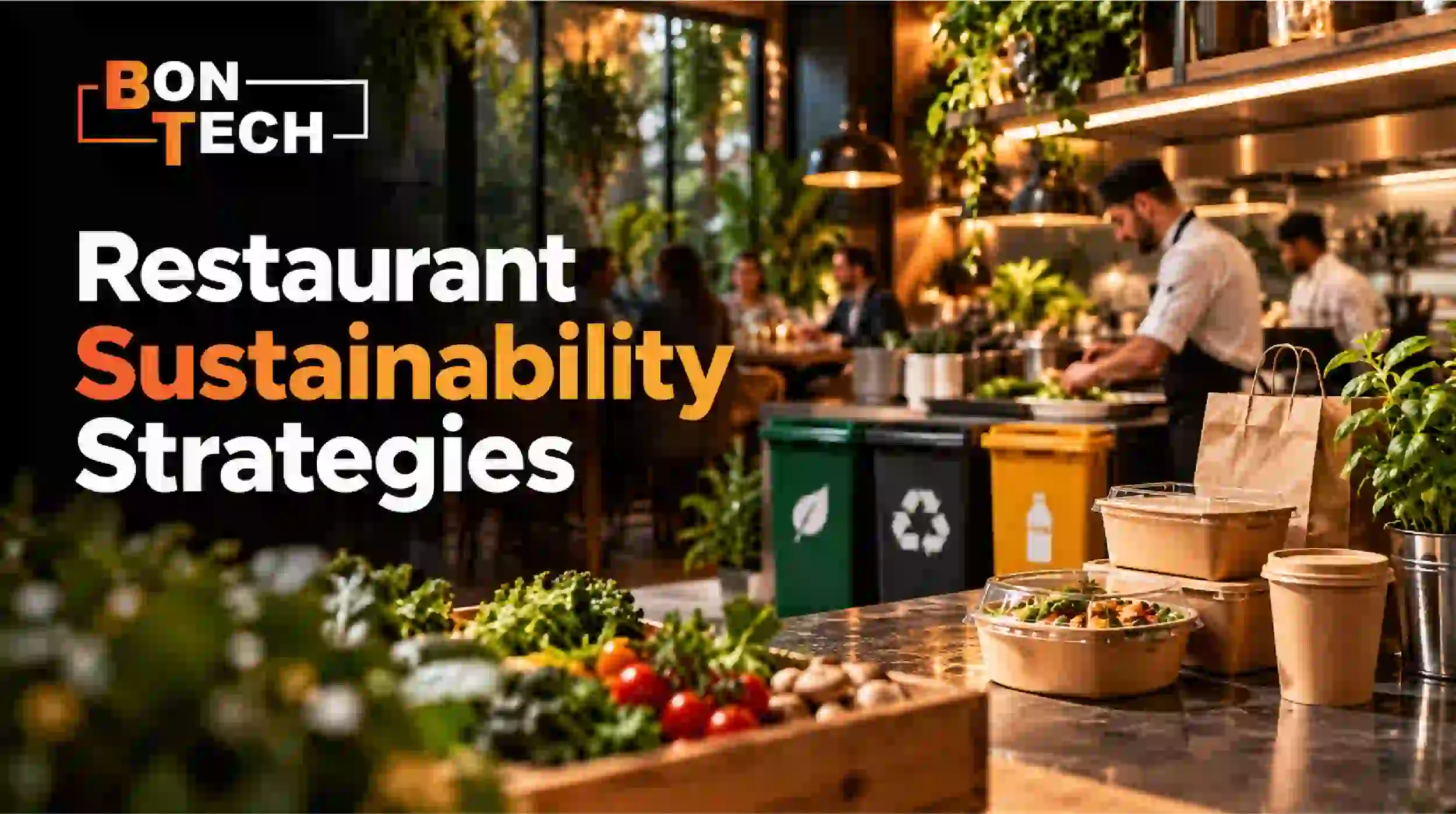
Effective restaurant sustainability strategies focus on measurable actions and continuous improvement. Some core restaurant sustainability practices include:
Reducing food waste through better forecasting
Optimizing portion sizes
Training staff on waste-conscious operations
Using digital systems instead of paper
Monitoring performance using restaurant sustainability KPIs
These strategies allow restaurant owners to track progress, identify inefficiencies, and make data-driven decisions that benefit both the environment and the bottom line.
Book a free trial of Bontech Point of Sale System (pos)
Menu Management for Sustainability
Menu design plays a major role in restaurant sustainability. A well-structured menu reduces ingredient overlap, simplifies inventory, and minimizes spoilage.
Sustainable menu management includes:
Removing low-selling, high-waste items
Designing menus around seasonal availability
Standardizing recipes to control portions
Highlighting sustainable choices to customers
Many restaurant sustainability examples show that streamlined menus not only reduce waste but also improve kitchen efficiency and customer satisfaction. For fast food restaurant sustainability, limited but optimized menus are often the key to reducing excess inventory and preparation errors.
Read more: Best POS System for Cafe – Saudi Arabia Guide 2026
Inventory Management System: The Core of Waste Reduction
An Inventory Management System is the backbone of restaurant sustainability. Without accurate inventory tracking, food waste is inevitable. Real-time inventory systems enable restaurants to monitor stock levels, expiration dates, and usage patterns in near real-time.
Key sustainability benefits include:
Reduced over-ordering
Lower spoilage rates
Better supplier planning
Improved cash flow
Tracking inventory also supports restaurant sustainability KPIs such as food cost percentage, waste ratio, and inventory turnover. This is especially crucial for fast food restaurant sustainability, where high volume and speed increase the risk of waste.
Read more: Restaurant Kitchen Display Systems: More Than Just a Screen
Kitchen Display System (KDS) to Reduce Errors
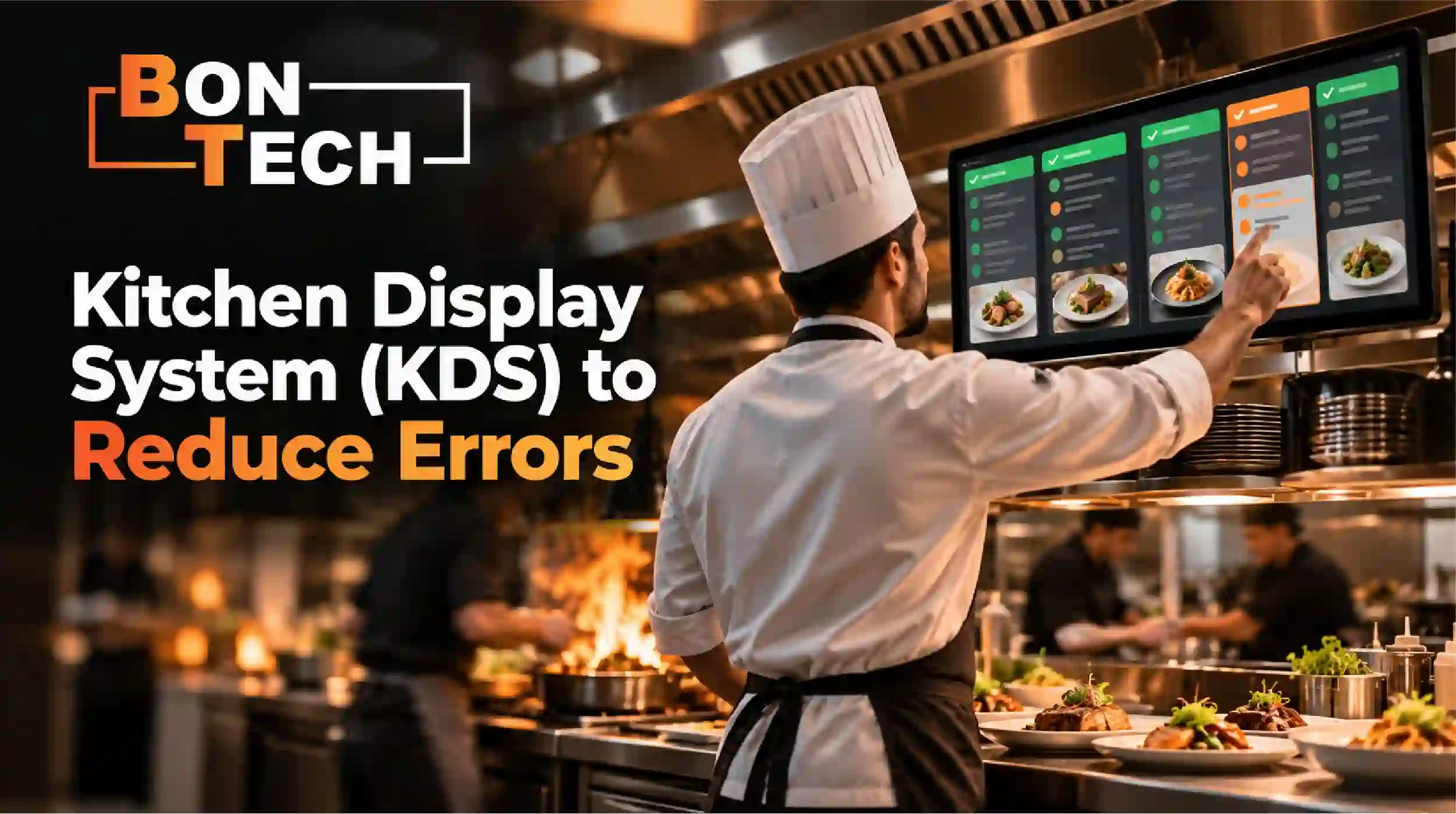
Human error is a major contributor to food waste. A Kitchen Display System (KDS) replaces paper tickets with digital order screens, ensuring accuracy and speed in food preparation.
KDS improves restaurant sustainability by:
Reducing wrong orders
Improving communication between front and back of house
Shortening preparation time
Enhancing order consistency
By minimizing mistakes, restaurants cut unnecessary remakes, saving both ingredients and labor. This technology is a powerful example of how digital tools support modern restaurant sustainability practices.
The Restaurant Management System as Your Sustainability Control Center
A Restaurant Management System (RMS) acts as the central hub for sustainability efforts. It integrates POS, inventory, menu management, reporting, and staff performance into one platform.
With an RMS, restaurant owners can:
Monitor restaurant sustainability KPIs in real time
Identify waste hotspots
Track sales vs. inventory usage
Make informed decisions quickly
Many leading restaurant sustainability examples show that centralized systems are essential for long-term success, especially in multi-branch and fast food operations.
How Bontech Helps You Execute Restaurant Sustainability
Bontech provides advanced restaurant management solutions designed to support restaurant sustainability in Saudi Arabia. Through integrated systems for POS, inventory management, menu planning, and kitchen operations, Bontech helps restaurants reduce waste, control costs, and improve efficiency.
Bontech solutions enable:
Smart inventory tracking to reduce food waste
Data-driven menu optimization
Seamless Kitchen Display Systems to minimize errors
Clear reporting dashboards to track sustainability KPIs
Whether you manage a fine dining restaurant or focus on fast food restaurant sustainability, Bontech gives you the tools to turn sustainability into a competitive advantage.
Restaurant sustainability is not just good for the planet, it’s good for business. With the right strategies and tools like Bontech, restaurants in Saudi Arabia can cut waste, boost profit, and build a more sustainable future.
FAQ
What is restaurant sustainability?
Restaurant sustainability is the practice of running a restaurant efficiently while reducing environmental impact, minimizing waste, and maintaining long-term profitability through smart systems and responsible operations.
How can restaurants be more sustainable without raising prices?
Restaurants can adopt sustainability by reducing food waste, optimizing inventory, improving staff efficiency, and using digital systems. These restaurant sustainability practices lower costs, making price increases unnecessary.
What are the best restaurant sustainability practices to start with?
The best starting points include inventory management systems, menu optimization, waste tracking, and setting clear restaurant sustainability KPIs to measure progress and identify improvement